
What Are 7 Things You Should Avoid Putting in the Washing Machine?
Modern washing machines are engineering marvels designed to handle heavy daily use, but they are not indestructible shredders or catch-all cleaning basins. As repair technicians, we are called out weekly to diagnose machines that are leaking gallons of water, making violent roaring sounds, or refusing to spin altogether.
More often than not, the culprit is not normal mechanical wear and tear. It is an item that should never have entered the drum in the first place. When an improper object goes through a cycle, the resulting breakdown can lead to costly professional washer repair or even total unit replacement.
Here are the seven things you should strictly avoid putting into your washing machine, the exact internal damage they cause, and what you should do instead.
1. Loose Coins, Keys, and Stray Hardware
The smallest, most innocent-looking pocket clutter is responsible for some of the most catastrophic washing machine failures we encounter.
When you leave loose change, screws, nails, or house keys in your pockets, high-speed centrifugal force flings these hard metal objects violently against the interior. They strike plastic drum baffles, snap electric water-heating elements, or slip through the small drainage holes of the inner drum.
Once past the drum, these metal pieces drop directly into the sump hose and wedge inside the drain pump. When the spinning impeller hits a solid coin or screw, it shatters the plastic housing or locks the motor in place, causing the electric motor to burn out. Worse yet, a sharp coin or screw can get trapped between the fast-spinning stainless steel basket and the stationary outer plastic tub, gouging deep cuts or punching a complete hole through the tub wall, resulting in severe water leaks across your floor.
2. Unprotected Underwire Bras
Underwire bras might seem like standard laundry, but they pose a severe hidden mechanical hazard when tossed into the machine without protection.
During vigorous wash and spin cycles, the metal structural wire frequently works its way out of the fabric channeling. Once loose, the thin metal wire easily slips through the perforations in the stainless steel basket.
As the drum spins at speeds over 1,000 RPM, the trapped wire scrapes against internal hoses, snags heating element assemblies, or punctures the outer tub. In many cases, the wire wraps around the drive shaft or jams the drum mechanism entirely, turning a routine laundry load into an emergency service call for washer repair.
3. Memory Foam and Feather Pillows
While freshening up pillows sounds like good home maintenance, traditional washing machines and memory foam or feather fillings are fundamentally incompatible.
Memory foam acts like a giant, dense sponge that absorbs massive volumes of water without releasing it easily. The intense mechanical agitation tears the solid foam core into useless chunks, while the water weight creates a massive, uneven load.
Feather pillows present a similar problem: when saturated, the feathers clump together into a heavy, off-center mass. When the machine enters the spin cycle, this severe unbalance causes violent drum thrashing, which snaps suspension springs, destroys internal shock absorbers, and damages the drive motor.
4. Rubber-Backed Bath Mats and Heavy Rugs
Washing rubber-backed floor mats in a standard residential machine is a fast route to major plumbing and mechanical clogs.
The combination of warm water, detergent, and agitation quickly degrades the rubber backing, causing it to peel, crumble, and disintegrate into thousands of small, sticky fragments. These rubber pieces do not dissolve; instead, they bypass the lint filter, clog the sump lines, and choke the drain pump assembly.
Additionally, heavy rugs trap immense amounts of water and refuse to distribute evenly along the drum walls, triggering extreme out-of-balance errors and placing immense strain on the washer’s transmission and bearings.
5. Bulky Pet Beds and Excess Pet Hair
Pet bedding introduces two simultaneous points of failure: shredded internal stuffing and thick mats of fur.
Large pet beds rarely balance properly during high-speed extraction cycles, forcing the washer to shake violently against its frame. Furthermore, loose pet hair binds with residual detergent and water to create dense, felted clumps.
These hair clumps travel deep into the drainage system, coating the water-level pressure sensors, choking drain lines, and wrapping around pump impellers until the machine fails to drain and displays persistent error codes.
6. Gasoline, Solvents, and Flammable Cleaners
Tossing rags soaked in gasoline, paint thinner, motor oil, or heavy solvents directly into your washing machine is an extreme safety and mechanical hazard.
Because washing machines run in an enclosed drum with internal electric motors, solenoids, and switches that generate small, normal operational sparks, volatile chemical fumes can ignite, posing a serious fire or explosion risk.
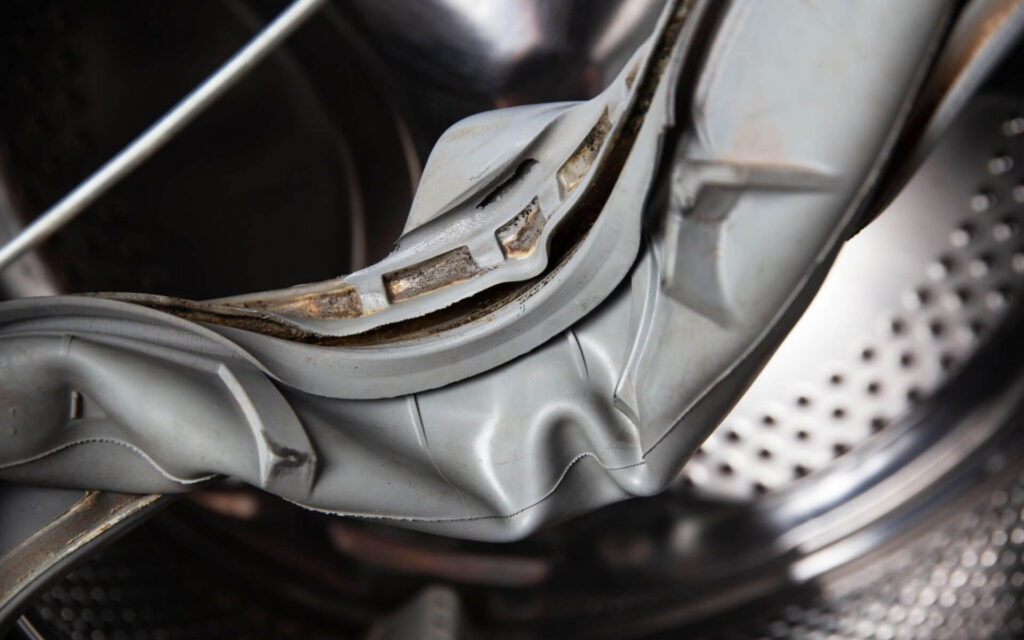
From a structural standpoint, petroleum-based chemicals and harsh solvents aggressively attack synthetic materials. They dissolve and swell the rubber door boot gasket, degrade internal drain hoses, and destroy the delicate shaft seals that keep water away from the drive system.
7. Excess Detergent and Undiluted Harsh Chemicals
Many people believe that more soap equates to cleaner laundry, but overdosing detergent is one of the leading causes of long-term machine destruction.
Excessive soap creates thick, suffocating foam that backs up into air-pressure water-level sensors, leading to continuous fill errors and overflow conditions. When suds spill over internal components, moisture reaches control boards, causing short circuits and electrical failures.
Even worse, heavy detergent residues and harsh chemical cleaners corrode aluminum structural parts—particularly the drum spider arm that supports the entire basket. Undiluted chemicals also strip the protective lubricating grease from the main tub seal. Once moisture penetrates the seal, the steel ball bearings rust, seize, and produce a deafening roaring noise during spins, requiring intensive washer repair to rebuild the rear bearing assembly.
The Golden Pre-Wash Rule and Safe Cleaning Alternatives
Avoiding expensive repairs comes down to building a simple, consistent pre-wash habit before every single load.
The Essential Loading Checklist
- Check and empty every pocket completely to catch forgotten coins, screws, keys, and hairpins.
- Zip all metal zippers, fasten hooks, and button rough fasteners so they cannot catch on drum perforations or delicate fabrics.
- Inspect items for loose trims, fraying seams, or shedding materials before placing them in the drum.
Safe Alternatives for Hard-to-Wash Items
- Use zippered mesh laundry bags for any items containing underwires, hooks, or delicate hardware to contain escaped parts safely.
- Spot-treat greasy, oily, or solvent-soaked garments by hand with dish soap in an open, well-ventilated area before letting them air-dry completely prior to washing.
- Take bulky memory foam pillows, large rugs, and heavily soiled pet beds to a commercial laundromat with oversized equipment or use professional dry cleaning services.