
Is Your Stove Faulty? The Warning Signs, Safe Tests, and When to Call for Stove Repair
A kitchen stove rarely fails overnight without warning. More often than not, it gives subtle clues that something under the surface is beginning to deteriorate. Unfortunately, many homeowners brush off these slight quirks because the appliance still manages to boil water or bake a meal.
Ignoring those minor performance hiccups is how a simple fix turns into an emergency service call or an outright safety hazard. Recognizing the earliest indicators of trouble protects your home, helps you decide when to schedule a professional stove repair, and prevents small electrical or gas faults from cascading into catastrophic damage.
Here is what you need to look for, how to safely test your equipment, and how to know whether your appliance is worth saving.
Subtle Warning Signs Homeowners Consistently Overlook
When people think of a broken stove, they picture a burner that refuses to turn on or an oven that stays completely cold. In reality, the most critical warning signs appear while the unit is still functioning.
Gas Range Red Flags
Gas stoves rely on a balanced air and fuel mixture to burn cleanly and safely. Any shift in flame behavior or ignition speed requires your immediate attention.
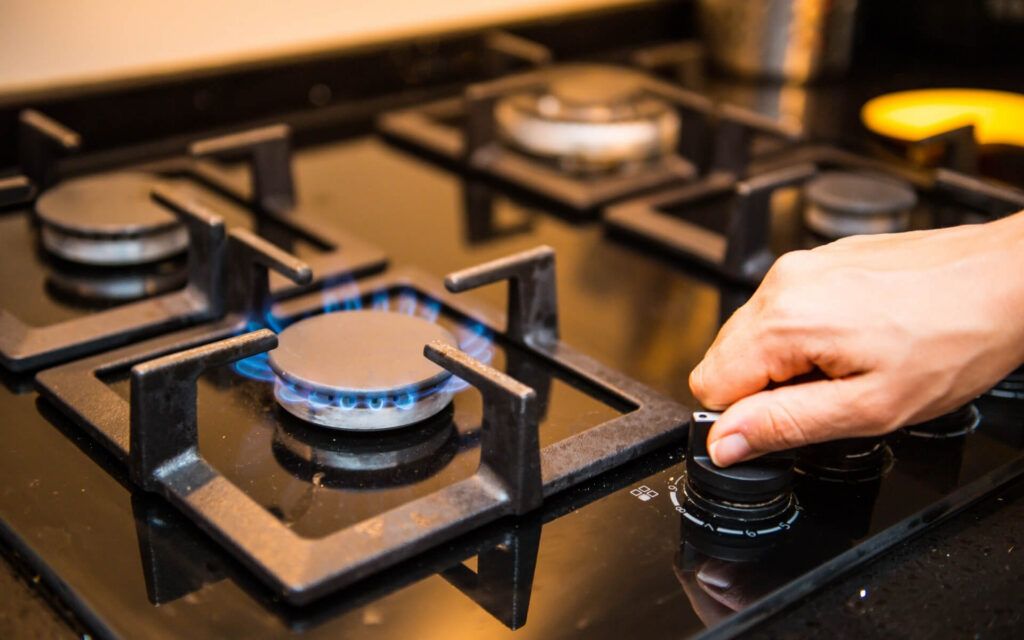
- Crisp blue flames should always be present across every burner. If you notice persistent yellow or orange flames, your fuel is not combusting completely. Incomplete combustion produces dangerous carbon monoxide, which is an immediate safety concern.
- Igniters should catch quickly. A healthy burner clicks and ignites within two to three seconds. If your igniter clicks repeatedly for five, ten, or fifteen seconds before catching, the spark module or the internal gas valve is failing.
Electric and Glass Cooktop Warnings
Electric ranges present their own set of quiet indicators before an element burns out completely or damages the main circuitry.
- Noticeable delays in preheating times usually indicate that one of your bake or broil elements has weakened significantly.
- Uneven glowing or dark dead spots across an electric coil or radiant burner signify that the heating filament is breaking down.
- Tiny hairline fractures or micro cracks along the perimeter of a smooth glass cooktop should never be ignored, as heat stress can cause the glass to shatter unexpectedly.
- A faint smell of burning plastic or hot insulation during regular cooking cycles points directly to overheating internal wiring or a switch that is beginning to melt.
A Real Call: How an Ignored Click Nearly Caused a Fire
A service call from my own field experience highlights why paying attention to these minor symptoms matters so much.
A homeowner called for assistance because his gas range igniter was making a faint, persistent clicking sound. He almost chose not to call at all because the cooktop burners were still lighting and the oven seemed to bake properly. To him, the clicking was merely an annoying background sound.
Once I pulled off the rear access panel, the severity of the problem was obvious. A tiny gas leak had developed at a failing safety valve behind the unit. Because the gas could not ignite cleanly, it was slowly collecting in the rear cabinet cavity, charring the surrounding electrical wire insulation every time the spark module fired.
Replacing that small valve on the spot resolved the problem immediately. Catching that subtle click before the charred wire insulation caught fire prevented thousands of dollars in structural property damage and protected the family inside.
Simple DIY Performance Checks You Can Run Today
You do not need specialized diagnostic tools or mechanical experience to evaluate your stove. You can run three quick, non invasive checks right now without opening a single panel or putting yourself in danger.
The Gas Burner Visual Check
Turn each burner knob to high, one at a time. Watch how the flame forms around the entire burner cap. The flame should be stable, sharp, and uniformly blue. If you see erratic flickering, yellow tips, or gaps where the flame will not catch, your burner ports are likely clogged with debris, or the air shutter needs professional adjustment.
The Glass Cooktop Heating Check
Turn each radiant burner to its medium high setting. Watch the burner as the radiant ring powers on. The element should light up evenly in a uniform circular glow. If you spot cold sections, dark gaps, or hear buzzing and clicking behind the control knobs, the radiant switch or wiring block is failing.
The Oven Thermometer Calibration Check
Never rely solely on your oven’s built in digital display to confirm that the temperature is accurate. Place an inexpensive, standalone oven thermometer directly on the center rack. Set your oven to 350 degrees and allow it to preheat completely until the chime sounds. Check the dial on the physical thermometer through the door window. If the physical reading is significantly higher or lower than the 350 degree target, your temperature sensor, thermostat, or heating relay is malfunctioning and requires dedicated stove repair.
The 50 Percent Rule: When to Fix vs. When to Replace
Deciding whether to call a technician for stove repair or invest in a brand new unit is a common dilemma. A dependable guideline to follow is the 50 percent rule.
If your stove is more than seven years old and the estimated stove repair quote exceeds half the price of purchasing a comparable new model, replacement is almost always the smarter financial move.
Certain repairs are affordable, straightforward, and easily extend the lifespan of an otherwise dependable appliance:
- Swapping out a failed surface element or bake element
- Replacing a sticky or broken door hinge
- Installing a fresh spark igniter or spark module
- Replacing worn out infinite switches behind burner control knobs
However, there are definitive red lines where sinking money into an aging stove simply makes no sense:
- A heavily cracked or shattered ceramic glass cooktop, where replacement glass often costs nearly as much as a new unit
- Severe heat damage or fried wire harnesses running throughout the internal chassis
- A dead main control board on an older, discontinued model where replacement parts are obsolete or exorbitantly priced
The Number One Mistake That Destroys Stoves Prematurely
Most major cooktop breakdowns are not caused by factory defects. They are caused by common cleaning and cooking habits.
The single biggest mistake homeowners make is allowing heavy liquid boil overs to sit and soak into burner assemblies and control housings. When soups, stews, or pasta water boil over, that salty, acidic liquid quickly seeps past the surface seals and drips down into the small openings surrounding gas igniters, electrical switches, and glass cooktop borders.
Over time, this trapped moisture corrodes delicate metallic terminals, creates electrical shorts, and fries expensive electronic circuit boards.
To prevent premature failure, adopt a simple habit starting today: wipe down spills as soon as the surface is cool enough to touch safely. Always use a lightly dampened microfiber cloth rather than soaking the surface with spray bottles or soapy buckets. Never allow pools of water to gather around the burner bases or control dials. Keeping these internal electrical pathways dry and clean prevents unnecessary corrosion, protects your sensitive electronics, and adds years of trouble free life to your stove.