
The Right Way to Clean a Glass or Induction Stovetop Without Scratching It
If you’ve ever scrubbed your stovetop aggressively and ended up with a dull, hazy surface that wasn’t there before, you’re not alone. As an appliance repair professional, this is one of the most common forms of preventable damage I see — and in almost every case, it wasn’t the cooking that caused it. It was the cleaning.
Drawing on years of hands-on appliance repair experience, this guide covers everything you need to know to safely clean your glass, ceramic, or induction stovetop without scratching or dulling the surface.
The Most Common Stovetop Cleaning Mistake
The biggest mistake homeowners make is using cleaning products that were never meant for stovetops. Harsh chemical sprays and heavy-duty household cleaners might seem effective, but on a smooth glass or ceramic surface, they do real damage. The chemicals break down the finish over time, and abrasive materials leave behind scratches that trap grease and permanently dull the surface.
This type of damage doesn’t always show up immediately. It builds slowly with each cleaning until one day the cooktop looks worn, hazy, and far older than it actually is.
Glass, ceramic, and induction cooktops are the most frequently serviced surfaces in appliance repair, and improper cleaning is consistently one of the leading causes of cosmetic and surface damage that homeowners bring to us.
A Real Case That Changed How I Explain This to Clients
One of the clearest examples I’ve seen in my appliance repair work involved a homeowner with a brand-new black glass-ceramic induction cooktop. They noticed it had developed a strange, foggy appearance around the front burner and assumed it was a manufacturing defect.
When I inspected the surface up close, it wasn’t a manufacturing issue at all. There were thousands of microscopic scratches creating a dense, hazy cloud across the entire glossy finish. The damage was done in a single cleaning session using a green heavy-duty scouring pad and dry abrasive cleaning powder.
The homeowner thought they were being thorough. Instead, they had permanently ruined the surface. That damage was irreparable without professional resurfacing.
That case is one I bring up often because it perfectly illustrates how quickly the wrong cleaning approach can cause serious damage, even with good intentions.
How to Safely Clean a Glass, Ceramic, or Induction Stovetop
The process doesn’t require much — just the right materials, the right technique, and patience.
Always Start With a Completely Cool Surface
Never attempt to clean a stovetop that is still warm or hot. Applying cold products or cloths to a hot glass-ceramic surface can cause thermal shock and cracking. Let the stovetop cool fully before you begin.
Use a Razor Blade Scraper at a 45-Degree Angle
For heavy, burned-on food residue, a razor blade scraper is one of the most effective tools available — and it’s what appliance repair professionals actually use. The key is holding it at a 45-degree angle against the surface and keeping the blade flat. Never hold it upright at 90 degrees, or you risk gouging the glass directly.
This technique removes stubborn buildup cleanly without scratching when done correctly.
Apply a Cooktop-Safe Cleaner and Let It Sit
Use a cleaner specifically formulated for glass or ceramic cooktops. Apply it to the surface and give it a few minutes to work before you do anything else. This step is where most people lose their patience and rush into scrubbing. Don’t.
If you prefer a natural option, a thick baking soda paste made with a small amount of water works very well as a gentle, non-abrasive alternative.
Scrub Gently With a Non-Scratch Pad
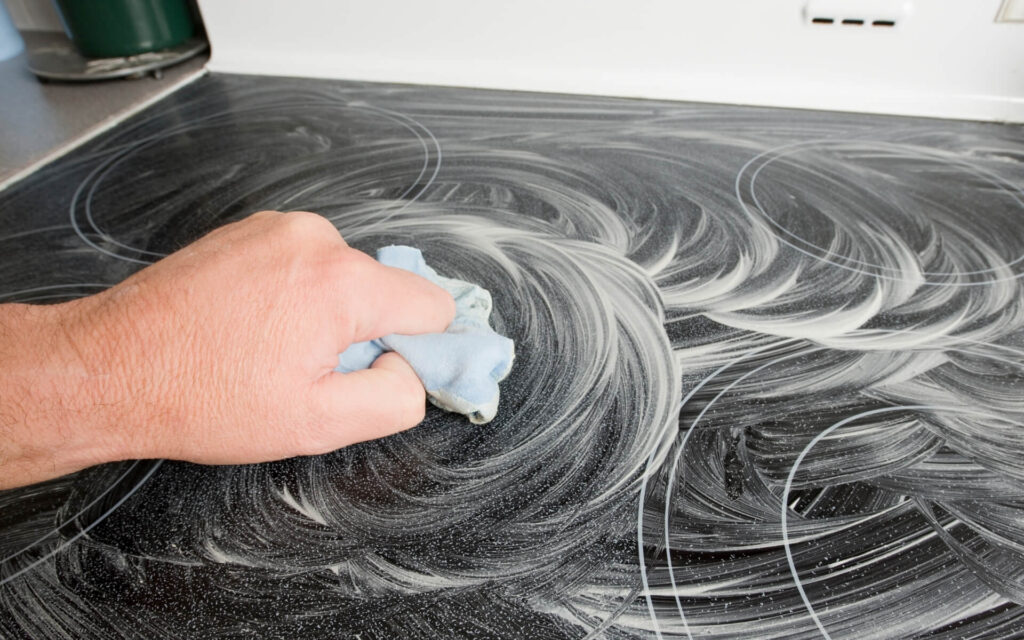
Once the cleaner has had time to break down the grease, use a non-scratch scrubbing pad and work in gentle circular motions. You are not trying to overpower the stain. You are guiding the loosened residue off the surface. The cleaner is doing most of the work. Your job is just to help it along.
Wipe Clean With a Microfiber Cloth
Finish by wiping the surface with a damp microfiber cloth. Microfiber is ideal because it’s soft, lint-free, and won’t introduce new scratches. Buff dry with a second clean cloth for a streak-free finish.
Household Alternatives That Are Safe to Use
If you don’t have a specialized cooktop cleaner at home, there are a few everyday items that work effectively without causing damage:
- Baking soda mixed into a paste is excellent for burned-on grease and general grime. Apply it, let it sit, and wipe gently.
- White vinegar handles streaks, light residue, and surface disinfection well. Spray it on and wipe clean.
- Lemon juice works on mineral deposits and mild stains through gentle natural acid action.
What all three have in common is that they work through chemistry rather than abrasion. That distinction matters more than most people realize.
The Biggest Myth in Stovetop Cleaning
One of the things I see constantly in generic cleaning guides and online videos is the idea that you need to scrub hard to remove burnt food. This is one of the most damaging pieces of advice circulating in the home cleaning space.
On glass, ceramic, and stainless steel stovetop surfaces, aggressive scrubbing permanently scratches the finish. Once those scratches are there, they don’t buff out. The surface is changed.
Gentle chemical soaking lifts grease just as effectively without causing any damage. The process is not about force. It’s about giving the right product enough time to do what it was designed to do.
From an appliance repair standpoint, I’ve seen more stovetop surfaces ruined by hard scrubbing than by any other single cause. Patience is genuinely the most underrated part of proper stovetop care.
The One Habit That Protects Your Stovetop Long-Term
If there’s one thing I’ve learned from years in appliance repair, it’s that most stovetop damage is completely avoidable. The homeowners who keep their cooktops looking great for years aren’t doing anything complicated. They’re just thinking before they clean.
Before you reach for any product or tool, ask yourself a few quick questions:
- Is this product actually meant for stovetop surfaces?
- Am I about to use something abrasive?
- Have I given the cleaner enough time to work before I start scrubbing?
That brief moment of mindfulness before you begin is what makes the difference between a stovetop that stays in great condition and one that ends up needing an appliance repair call down the road.
What to Avoid Completely
To make this as practical as possible, here’s what should never come near a glass, ceramic, or induction stovetop:
- Green heavy-duty scouring pads
- Steel wool or metal scrubbers
- Dry abrasive powders
- Harsh multi-surface chemical sprays not formulated for cooktops
- Rough paper towels or dish scrubbers with abrasive backing
These materials damage the surface even when used gently. The risk isn’t worth it when safer alternatives work just as well.
Final Thoughts on Stovetop Care From an Appliance Repair Professional
Your stovetop is one of the hardest-working appliances in your home. The surface deserves to be treated with care — not just because of how it looks, but because maintaining it properly extends the life of the appliance and keeps it functioning the way it should.
Safe stovetop cleaning comes down to three things: using the right products, applying the right technique, and giving the process the patience it requires. Skip any one of those, and you’re taking an unnecessary risk with a surface that cannot be easily restored once it’s scratched.
If you’re dealing with a stovetop that’s already been damaged by improper cleaning, or if you’re unsure whether what you’re seeing is surface damage or a deeper appliance issue, reach out to Texcen Appliance Repair. Appliance repair doesn’t always mean something is broken — sometimes it starts with knowing how to take care of what you already have.